
Amethyst: Meaning, Properties, Uses, and Care Tips!
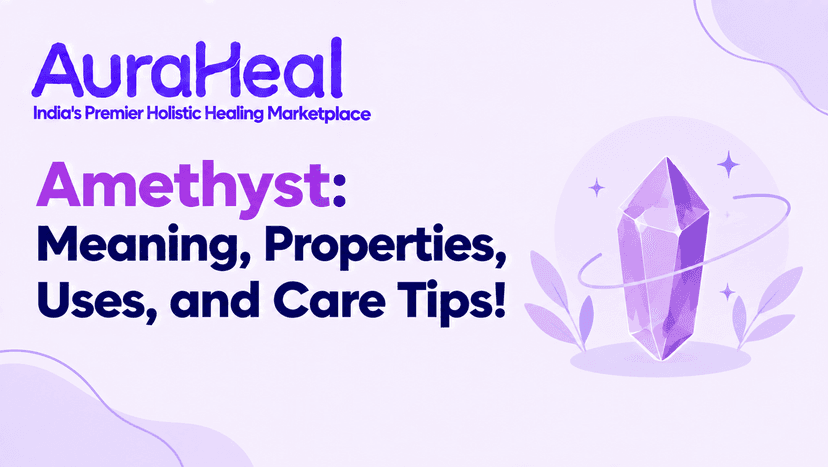
Amethyst is one of the most beautiful quartz varieties with a wide range of colors from light lavender to deep violet. Throughout history, amethyst has been attributed with a number of qualities, including calmness, clarity, protection, intuition, and spiritual awareness. However, it is important to realize that healing claims related to crystals do not rely on scientific evidence.
Rather, they are mostly related to complementary medicine and spirituality. Therefore, learning about amethyst meaning, properties, uses, spiritual symbolism, and simple care tips will help you fully appreciate it. Learn more!
What is Amethyst?
Amethyst is a crystalline quartz containing silicon dioxide. The purple color of amethyst is created due to geological processes involving iron and irradiation. As a hard stone with a 7 on the Mohs scale, it is durable enough to be used in jewelry. Amethyst possesses a glassy luster and usually forms inside volcanic geodes when mineral-rich water deposits quartz crystals inside.
Brazil, Uruguay, Zambia, Namibia, India, Russia, Canada, and Madagascar are some of the countries where amethyst deposits are mined. It comes in a range of colors, from delicate lilac to rich reddish-violet and deep purple.
Historical Significance of Amethyst
Since ancient times, amethyst has played an important role in a number of different cultures and spiritual practices. It was an integral part of legends, beliefs, and traditional practices.
Uses and Legends in Ancient Times
The people of Ancient Egypt appreciated amethyst because of its unique appearance and often used it to make jewelry and protective amulets. Traditionally, this stone was considered to possess a protective quality. Roman Bacchus was one of the gods of wine who was closely linked to amethyst.
According to ancient legends, amethyst was believed to help keep a person sober. Some people used drinking cups made out of amethyst, assuming they were able to maintain clarity of mind. Also, amethyst was associated with mystical practices and witchcraft. It was believed to provide the owner with additional psychic abilities.
Amethyst in Different Cultures
This gemstone was highly regarded in Christian culture as well. Bishops often wore amethyst rings as symbols of spirituality, devotion, and moral purity. In other cultures, amethyst was viewed as a stone of wealth and royalty. The kings and queens used amethyst in order to represent their power and authority.
The ancient Greeks and Romans greatly appreciated amethyst and used it for making sculptures, jewelry, and artworks. In particular, the rich purple color of amethyst was associated with divinity and royalty. The stone has played an important role in history since ancient times and was widely used for different purposes.
Benefits & Healing Properties of Amethyst
In addition to its beautiful appearance, amethyst is known for its traditional properties. This makes this gemstone popular in lithotherapy, meditation, and other spiritual practices.
Metaphysical and spiritual properties
Calmness and soothing: Amethyst is often associated with calmness and mental relaxation. During meditation, spiritual healers use amethyst to induce relaxation and create a calm state of mind.
Purification: This stone is traditionally believed to cleanse the environment from unwanted energy and create harmony. People put amethyst in their homes in order to perform spiritual purification.
Intuition and clairvoyance: Amethyst is traditionally linked with the third eye and is said to strengthen intuition. Moreover, some spiritual practices associate amethyst with clairvoyance and inner wisdom.
Physical benefits
Sleep improvement: Crystal therapy practices associate amethyst with restful sleep and relaxation. It is recommended to put amethyst under one's pillow or beside a bed in order to facilitate peaceful sleep and help avoid nightmares.
Hormonal balance: According to certain lithotherapy practices, amethyst is believed to promote hormonal balance and proper functioning of the endocrine system. This belief is not supported by scientific studies.
Chakra harmonization
Crown chakra stimulation: Amethyst is strongly connected with the crown chakra located at the top of the head. Spiritual traditions believe that working with amethyst can encourage a connection with higher consciousness and spiritual energy.
Emotional Balance: As mentioned, through its connection with the crown chakra, amethyst is said to help achieve emotional balance. It helps people cultivate a more stable mindset with emotional balance.
Popular Uses of Amethyst
Another reason why amethyst is convenient for people is that the stone can be used in many ways, which makes it easily integrated into daily activities and life in general. Here are some of the most popular uses of amethyst:
Jewelry
Wearing amethyst can be a way to connect with the stone on a regular basis. Rings, necklaces, bracelets, pendants, and earrings are different options for amethyst jewelry that enable its unique color to become an element of your personal style.
It is a traditional birthstone for February, so it is a great gift for people born in this month. When buying amethyst jewelry, pay attention to its color, transparency, cut, quality of workmanship, and stone quality.
For Meditation and Mindfulness
People often meditate using amethyst since its meaning is associated with calmness and mindfulness. Put a small amethyst stone next to your meditation spot or hold it during breathing practices.
You can use it as your focal point during meditation when you get distracted. The crystal does not need to produce a supernatural effect for this practice to feel meaningful. Its presence can simply reinforce a calming routine.
Home Decor
Amethyst clusters and geodes can make great decoration elements. They can introduce interesting shapes and color accents to your bedroom, meditation area, office, or living room.
In some spiritual traditions, the stone is put in different places of a house as a symbol of calmness and protection.
Carrying Amethyst
You can have a polished stone in your pocket, purse, or personal bag as a reminder to stay calm and centered in difficult moments.
But its practical benefit will mostly come from your intention and personal rituals rather than the scientifically unproven energy effect.
How to Cleanse and Take Care of Amethyst
Taking care of your amethyst can ensure its preservation in terms of its appearance and physical condition. Here are some ways to clean, protect, and take care of your amethyst:
Clean it Gently
To clean it regularly, use lukewarm water and a soft cloth. Gently remove the dust and residues.
Don't use harsh chemicals, abrasive cleaners, or brushes because they might impact its surface and cause damage to the accompanying settings in jewelry.
Protect it from Prolonged Sunlight Exposure
Some amethyst can be prone to fading with time due to prolonged exposure to sunlight.
Make sure that the valuable amethyst is protected from windows receiving strong direct sunlight. It is better to keep it in a shaded area for display.
Avoid Sudden Temperature Changes
Temperature extremes can be damaging for crystals and may contribute to their cracking.
Protect it from exposure to excessive heat and sudden cooling. It is especially important for large geodes and fragile crystal clusters.
Store it Separately
Even though the amethyst has decent hardness, it can scratch other materials, and it can be easily damaged by impacts.
Store the separate pieces in soft fabric pouches or lined compartments. Make sure that the jewelry is separated in order to avoid scratching.
Be Careful with Saltwater
There are some crystal traditions that recommend saltwater cleansing. However, it is not always necessary, and sometimes it may be inappropriate for some samples, settings in jewelry, or fractured stones.
The alternative dry cleansing and surface cleaning methods are much easier and safer to use for regular maintenance.
Conclusion
Amethyst combines the beauty, geological interest, historical background, and spiritual symbolism. Traditional associations include calmness, intuition, protection, clarity, and spiritual reflections. Although there is no scientific evidence of the healing abilities of crystals, the stone can help people in practicing personal rituals, meditation, mindfulness, and decoration.
If cleaned, stored carefully, and protected from prolonged sunlight exposure, it will keep its beauty for a long time. At AuraHeal, explore mindful crystal practices and book a session today with experienced healers for your personal wellness journey.
Keep Exploring
Rose Quartz: Meaning, Properties, Uses and Crystal Care!
Rose Quartz is a gentle pink crystal associated with love, emotional healing, compassion, and positive energy.
How are Crystals, Minerals, Gemstones and Rocks Different?
Crystals, minerals, gemstones and rocks differ in their composition, structure, formation, properties and how they are naturally found or used.
Clear Quartz: Meaning, Properties, Uses and Crystal Care!
Clear Quartz is traditionally associated with clarity, energy, balance and intention, while valued for its natural beauty and versatile uses.
Ready to Realign Your Energy?
Discover the root cause of your energetic blocks with Babita Ji — experience a profound shift completely complimentary.
Book Free Session Now