
Chakra Healing: A Guide to Balancing Your Energy Centres!
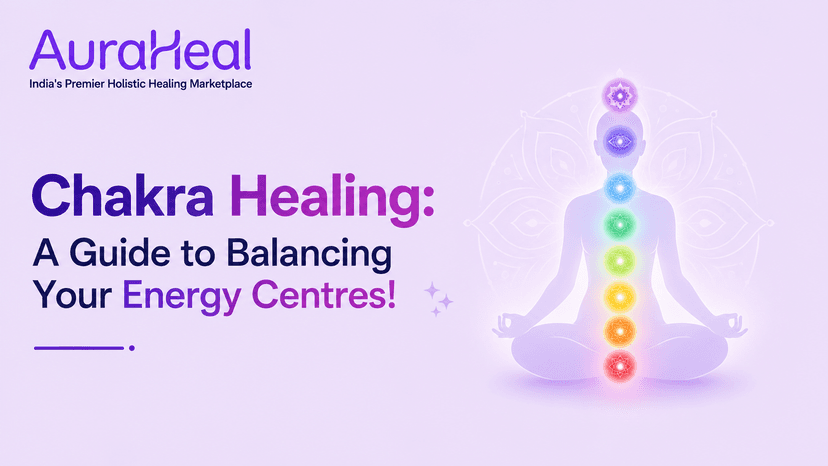
Chakra healing is an age-old wellness practice that focuses on the seven main energy centres that influence various aspects of physical, emotional, mental, and spiritual health. Coming from ancient Indian traditions, chakras represent an approach to becoming more aware of yourself physically, emotionally, mentally, and spiritually.
The seven chakras are traditionally described as energy centres from the base of the spine up to the crown of the head, where each chakra is associated with particular qualities, colours, elements, and other aspects of experience. Keep reading to learn about the 7 chakras, the signs of imbalance, and easy techniques for chakra balancing.
What are Chakras?
Chakra is usually translated into English as "wheel" or "circle". In the yogic traditions, chakras refer to energy centres within the astral body. As such, they do not represent physical organs which can be seen or observed with the help of regular medical equipment. Rather, chakras are just a traditional model of the interrelation between the body, mind, emotions, and consciousness.
The seven main chakras are placed one above the other, starting from the base of the spine to the crown of the head. Each chakra is associated with a particular colour, element, bodily location, emotional quality, and aspect of human experience. In traditional yoga philosophy, chakras are also linked to the movement and distribution of the prana, or the life energy.
The practice of chakra healing doesn't necessarily imply extensive spiritual work. For many people, it can only involve a structured approach to becoming more self-aware by means of meditation, yoga, breathing, affirmations, visualizations, sound, and mindful actions throughout the day.
Understanding the 7 Chakras
The seven chakras are interrelated energy centres, each of which is associated with some specific aspects of our health and well-being. The following are the seven main chakras and their roles in supporting balance, awareness, and inner harmony.
1. Root Chakra - Muladhara
The Root Chakra, or Muladhara, is placed in the base of the spine and is traditionally associated with the element of earth and the colour of red. It is all about grounding, stability, security, physical presence, belonging and basic needs for survival.
If you feel yourself constantly unstable, ungrounded, afraid, insecure, or unable to find stability, the practices of chakras can motivate you to focus on the Root Chakra. The balance of the Root Chakra is traditionally associated with such qualities as stability, confidence, self-sufficiency and grounding.
The grounding techniques such as mindful walking, spending time in nature, deep breathing, meditation and yoga poses like Mountain Pose, Warrior Pose and Tree Pose can be applied here. Its traditional seed mantra is Lam.
2. Sacral Chakra - Svadhishthana
The Sacral Chakra, or Svadhishthana, is placed in the lower abdomen and is associated with the element of water and the colour of orange. It is traditionally connected with the qualities of creativity, pleasure, emotional expression, relationships, sensuality and adaptability.
The imbalance is traditionally described as emotional rigidity, inability to express emotions, lack of creative energy, irritability and inability to connect with the feeling of pleasure and spontaneity. The balance of this chakra is associated with such qualities as emotional flexibility, creativity, compassion and vitality.
Creative activities, gentle movements, yoga poses to open the hips, mindful dancing, meditation and self-reflection can be beneficial practices. The seed mantra for the Sacral Chakra is Vam.
3. Solar Plexus Chakra - Manipura
The Solar Plexus Chakra, or Manipura, is located in the upper abdomen and is traditionally associated with the element of fire and the colour of yellow. It represents personal power, confidence, motivation, determination, self-respect and the ability to take decisive actions.
When people feel themselves powerless, overly self-critical, indecisive, angry or driven by perfectionism, the chakra tradition can motivate them to work on the Solar Plexus Chakra. The balance of the Solar Plexus Chakra is traditionally associated with such qualities as confidence, discipline, motivation, clarity and personal agency.
Yoga focused on the core, dynamic movements, conscious breathing, and other practices related to setting healthy boundaries can accompany work with this chakra. Its seed mantra is Ram.
4. Heart Chakra - Anahata
The Heart Chakra, or Anahata, is located in the center of the chest and is traditionally associated with the element of air and the colour of green. It represents love, compassion, trust, emotional openness, connection and balance.
If the heart center is emotionally closed, a person experiences difficulties with trust in others, feels jealousy, resentment, loneliness, or withdraws emotionally. Traditionally, the balance in this center is associated with compassion, acceptance, kindness and emotional connection.
Gentle yoga poses to open the chest, conscious breathing, gratitude practices, loving-kindness meditation, and healthy relationships can support Heart Chakra healing. Its seed mantra is Yam.
5. Throat Chakra - Vishuddha
The Throat Chakra, which is called Vishuddha, is associated with the element of space and the colour of blue. This Chakra is related to communication, self-expression, honesty, listening, creativity, and expressing oneself.
An imbalance could manifest as problems speaking, withholding of emotions, fear of misunderstanding, and inability to express oneself. A balanced Throat Chakra is associated with clear, honest, respectful, and constructive communication.
One may try journaling, mindful speaking, chanting, humming, meditation, and soft breathing exercises as part of a practice to work on the Throat Chakra. The traditional seed mantra of the Throat Chakra is Ham.
6. Third Eye Chakra - Ajna
The Third Eye Chakra, or Ajna, is located between the eyebrows and is associated with the colour indigo. This Chakra stands for intuition, perception, concentration, insightfulness, self-awareness, and self-reflection.
When a person experiences scattering of the mind or overwhelming of it, chakra meditation could focus on Ajna as the point of concentration. The traditional teaching says that a balanced Third Eye Chakra provides clearer perception, better concentration, wisdom, and self-awareness.
For the cultivation of awareness, meditation, reflection, breathwork, visualization, and reduction of distraction in the mind would be helpful. The traditional seed mantra of Ajna Chakra is Om.
7. Crown Chakra - Sahasrara
The Crown Chakra, or Sahasrara, is located on top of the head and represents the highest point of the traditional chakra system. It is associated with the colours violet and white, spirituality, wisdom, consciousness, stillness, and connection with something bigger than a person.
The signs of imbalance in this Chakra include feelings of detachment, meaninglessness, overattachment, and inability to achieve stillness and inner peace. A balanced Crown Chakra provides perspective, stillness, spirituality, and a sense of purpose.
Practices such as meditation, contemplation, quiet time, prayer, mindful breathing, and spirituality would help to develop this aspect of chakra practice. The traditional mantra of the Crown Chakra is Aum.
How to Balance Your Chakras?
There is no single technique suitable for everyone. Chakra balancing could include several simple practices which encourage relaxation, awareness, and intentional living. Some of these are:
Meditation: Chakra meditation includes focusing on a particular energy center while observing sensations, thoughts, emotions, or breathing in a non-judgmental way.
Yoga: Yoga poses could promote body awareness, mobility, flexibility, strength, and relaxation while integrating chakra practices.
Breathwork and Pranayama: Breathwork can help to calm the mind and increase the sense of connection with the body. Soft techniques are usually a good starting point for beginners.
Mantra and sounds: Repetition of the traditional seed mantras Lam, Vam, Ram, Yam, Ham, Om, and Aum can be used as a point of meditation and reflection.
Colour visualization: Each Chakra has its own colour, so meditating on red, orange, yellow, green, blue, indigo or violet could be helpful.
Mindful habits: Rest, balanced nutrition, spending time in nature, healthy relationships, creation, emotional reflection and regular physical activity can complement chakra healing practice.
Conclusion
Chakra healing provides a traditional approach to explore the connection of your body, emotions, mind, and inner awareness. The seven Chakras have their own qualities, from grounding and creation to confidence, compassion, communication, intuition, and spiritual awareness.
With the help of meditation, yoga, breathwork, mantras, visualization, and mindful habits, you can build a more intentional relationship with yourself. Start softly, listen to your body, and let your practice develop over time. Book a chakra healing session with our expert healers at AuraHeal today and take a meaningful step towards greater balance, awareness, and holistic well-being.
Keep Exploring

Larimar: Meaning, Properties, Uses and Crystal Care!
Larimar is a rare blue crystal associated with calmness, clear communication, emotional balance, and inner peace.

Green Aventurine: Meaning, Properties, Uses and Crystal Care
Green Aventurine is a green crystal associated with luck, prosperity, emotional balance, personal growth, and positive energy.

Kambaba Jasper: Meaning, Properties, Uses and Crystal Care!
Kambaba Jasper is a dark green stone with distinctive black circular patterns, traditionally associated with grounding, calmness, and emotional balance.
Ready to Realign Your Energy?
Discover the root cause of your energetic blocks with Babita Ji — experience a profound shift completely complimentary.
Book Free Session Now