
How are Crystals, Minerals, Gemstones and Rocks Different?
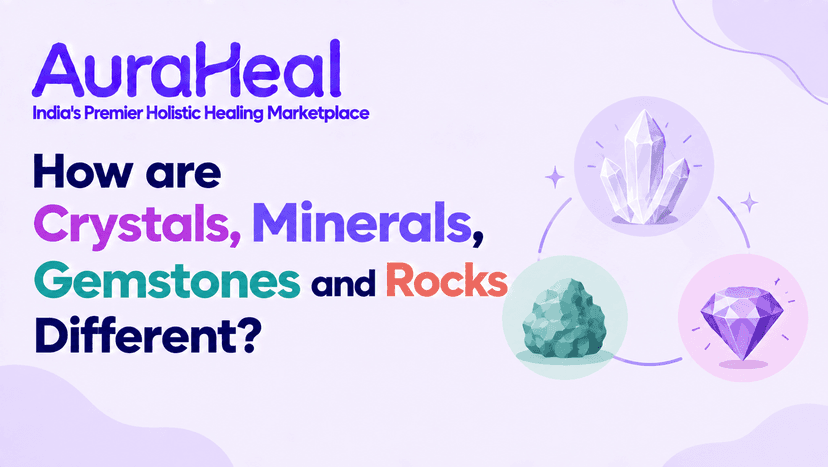
Crystals, minerals, gemstones, and rocks are visually similar objects, but in essence, they are quite different. These terms characterize various natural elements in their specific aspects. Understanding the difference will help recognize crystals and evaluate their characteristics.
Mineral is the term used for a naturally occurring substance, while crystal characterizes the structure of natural materials. Gemstone is used to describe materials that are valued for beauty and use in jewelry. Rock consists of minerals or other natural materials. Learn more to find out what connects crystals, minerals, gemstones, and rocks.
What is a Mineral?
A mineral is a naturally occurring inorganic solid that possesses a certain chemical composition. This term also implies the presence of a specific internal atomic structure. Such substances are formed as a result of geological processes. They can emerge deep in the Earth's crust, in rocks, or closer to the surface.
A well-known mineral is quartz. Its chemical composition is expressed by the formula of silicon dioxide, SiO₂. Other examples of minerals include:
Feldspar
Mica
Calcite
Halite
Pyrite
Corundum
There are minerals that consist of a single element. Examples of such minerals include gold, silver, copper, sulfur, and others.
Minerals can vary in color, texture, shape, and degree of transparency. All these properties of minerals depend on their chemical composition and structure.
What is a Crystal?
Crystal mainly refers to the structure of materials. Crystal structure includes atoms, ions, or molecules arranged in an ordered and repetitive way. This internal arrangement creates the characteristic properties of crystals. In certain cases, the growth of crystals leads to the formation of geometrical figures.
For instance, there can be found naturally grown crystal points of quartz. Another example of a crystal is amethyst, a variety of quartz with the same chemical composition. Nevertheless, not all crystals possess a geometrical figure or a point. Crystal shape can be affected by the conditions of its growth.
Are Crystals and Minerals the Same?
Although crystals and minerals are interrelated, these concepts are not interchangeable. The mineral is a natural substance possessing certain chemical and structural features. The crystal is a structure.
Most minerals have a crystalline structure; however, a mineral specimen does not necessarily reveal its crystal faces. Thus, quartz is both a mineral and a crystalline material. Besides, quartz can be considered a gemstone due to its appearance and value.
This explanation shows why the word "crystal" has a wider meaning than the word "mineral".
What is a Gemstone?
A gemstone is a natural material of great value due to its beauty, rarity, durability, or desirability. Most gemstones are minerals; however, not all gemstones are minerals.
Gemstones can be processed into jewelry or other decorative items. Examples of gemstones include:
Diamond
Ruby
Sapphire
Emerald
Amethyst
Topaz
Garnet
Some gemstones are varieties of minerals. Such minerals as ruby and sapphire are varieties of corundum. However, some gemstones are extracted from materials which are not minerals. Lapis lazuli is a rock, and obsidian is a volcanic glass. Also, pearls and amber are organic materials.
Therefore, gemstones should not simply be considered another name for minerals.
What is a Rock?
A rock is the natural solid substance that consists of minerals, mineraloids, or other natural materials. Contrary to minerals, rocks do not have any fixed chemical composition.
An example of a rock is granite. It consists of several minerals: quartz, feldspar, and mica. Thus, their combination forms a rock. Usually, rocks are classified into three main categories:
Igneous Rocks
These rocks are formed as a result of the cooling down of molten rock. They can form underground or after volcanic eruptions. Granite and basalt are good examples of igneous rocks.
In some cases, the molten rocks can cool down very quickly, and crystals do not have enough time to form. This causes the formation of obsidian, which has a glassy structure.
Sedimentary Rocks
Sedimentary rocks form on the basis of accumulated sediments. These sediments can consist of old rocks, minerals, plant debris, or other substances.
Under the effect of pressure and other natural processes, these materials become compacted and cemented. Examples of sedimentary rocks include sandstone, limestone, and shale.
Metamorphic Rocks
Metamorphic rocks appear as a result of metamorphism – processes during which existing rocks change as a result of exposure to heat, pressure, or chemical reactions.
In the course of these processes, rocks change, but do not melt completely. Thus, marble appears as a result of metamorphosis of limestone, while slate often originates from shale rocks.
How Crystals, Minerals, Gemstones and Rocks Connect
The four concepts become clear when put into context.
Quartz is an example that helps to illustrate the difference. Quartz is a mineral that exists in nature and has a well-defined chemical composition and structure. Moreover, it is crystalline, as its atoms are structured regularly.
Certain varieties of quartz become gemstones. Among them are amethyst, citrine and rose quartz. Corundum also has to be mentioned here. This mineral exists in nature in a crystalline state. However, its varieties such as ruby and sapphire have gem value.
Lapis lazuli serves as yet another example. Lapis lazuli is a rock consisting mostly of different minerals, but due to its attractive blue color, it also has gem value. This shows why the categories can overlap without meaning the same thing.
A Simple Way to Remember the Difference
The most convenient way to distinguish between these terms is to see what they describe:
Mineral: Naturally occurring inorganic substance with a definite chemical composition and internal structure.
Crystal: Naturally occurring material whose atoms, ions, or molecules form a regular structure.
Gemstone: Naturally occurring substance with aesthetic, rarity, durability, or decorative qualities.
Rock: Naturally occurring solid substance formed of one or more minerals, mineraloids or other materials.
However, these categories can sometimes overlap. For example, quartz is a mineral with a crystalline structure. When a quartz variety has attractive color, clarity, and quality, it can also be used as a gemstone.
This knowledge helps to distinguish the concepts better and understand how they relate to each other.
Conclusion
Crystals, minerals, gemstones and rocks may seem very similar at first glance, but each of them means and implies something else. Knowing their distinctions allows people to distinguish stones better and understand their unique characteristics. Whether it is chemical composition or crystal structure, each of these categories tells something about the stone.
With such knowledge, working with crystals becomes easier and more interesting. At AuraHeal, explore deeper crystal knowledge and holistic practices with expert guidance. Book a session today with experienced healers and discover a more mindful connection with crystals.
Keep Exploring
Clear Quartz: Meaning, Properties, Uses and Crystal Care!
Clear Quartz is traditionally associated with clarity, energy, balance and intention, while valued for its natural beauty and versatile uses.
Crystal Hardness Explained: Why Some Stones Need Extra Care?
Crystal hardness determines how resistant a stone is to scratches, damage, and wear, so softer crystals need gentler cleaning, handling, and storage methods.

How Often Should You Cleanse and Recharge Your Crystals?
Crystals can be cleansed and recharged whenever they feel energetically heavy, after frequent use, or at least once a month as part of regular crystal care.
Ready to Realign Your Energy?
Discover the root cause of your energetic blocks with Babita Ji — experience a profound shift completely complimentary.
Book Free Session Now