Finding Emotional Balance: How to Manage Life's Highs and Lows Naturally?
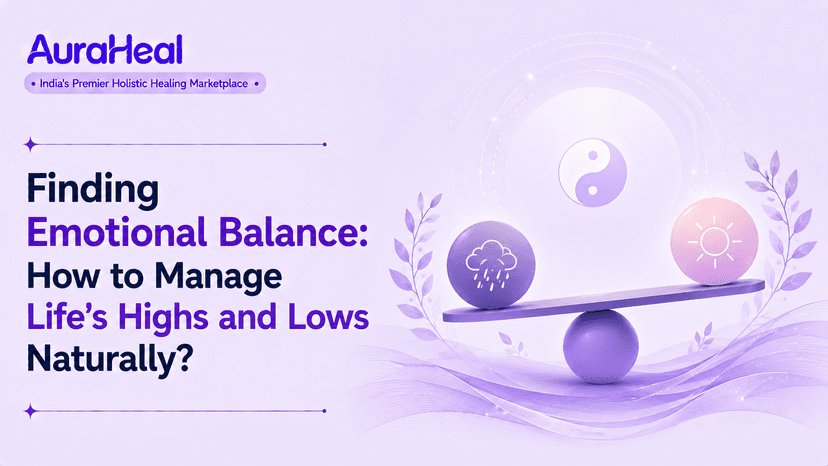
Life is a fascinating and unpredictable adventure full of a variety of different emotions. Today, you are floating on the high of a great achievement and tomorrow sunk low in the swamp of doubt or stress. Emotional ups and downs are totally normal in human beings. Nevertheless, when your moods start to govern your decisions, affect your relationships and make you always overwhelmed, it's high time to get some information on managing these emotional waves.
Mastering your emotional health in a natural way does not mean to block all of your feelings or stop being passionate. Rather, it means mastering your emotional regulation in order to live a highly fulfilling, peaceful and exciting life. Keep reading to learn how to become a boss of your emotions and build your internal balance.
Importance of Emotional Health
Our emotions are far beyond being a simple reaction of ours to the outside world. They represent an essential tool for internal communication which helps to gather important insights about our experience. Being highly aware of our emotional health gives access to a unique guide for improving decision-making, increasing your chances of successful relations, boosting everyday interaction and laying the foundation for excellent self-care.
When there is an imbalance in emotional spheres, its consequences may be devastating to daily functioning. Out-of-control emotional changes may blur your attention, decrease productivity and create tensions with people you love. Thus, by taking care of your emotional well-being you are going to protect your mind and body, thus raising the quality of your life considerably.
Focus on Emotional Regulation, Not Suppression
Many people try to shut up their emotions as soon as they appear. Therefore, it is necessary to understand the difference between emotional regulation and its suppression or repression. Suppression is when people actively push down their feelings and repressions occur unconsciously during a certain period of time.
Keeping your feelings in the closet is never a good idea since later on they may return to you as anxiety, depression and exhaustion. Feelings are like oil pressure in an engine, you do not want to keep it permanently on the explosive high level and you cannot turn it off either. The best thing to do in such cases is to master a healthy emotional well-being and find the perfect medium point.
Step-by-Step Techniques to Regulate Your Emotional Ups and Downs
Here are some helpful steps you can take in order to restore your inner peace:
1. Analyze the Real Impact
The first step is to look at how the emotion affects your life. Feelings are not bad because they make life more interesting and colorful. However, if you realize that constant mood swings cause too many conflicts in relationships, troubles at work and you feel like using any substances in order to relieve them, it is time to make a halt and learn how to master self-management skills.
2. Pause and Give Your Brain Some Time to React
Once the triggering situation happens, your brain is eager to respond immediately. One of the most effective self-management skills is the creation of a "response space". This means the time interval between your feeling and reaction which turns impulsive and negative responses into a conscious and wise one.
3. Breathe Consciously
Use your breathing as a natural tool to control your nervous system once you realize that the emotional storm is coming. Here is how to perform diaphragmatic breathing:
Sit down comfortably and put a hand on your belly.
Breathe slowly and deeply through your nose for four counts, feeling the belly expansion.
Keep the breath for four counts.
Let out the air through your mouth for four counts.
4. Notice and Identify Physical Signs
Feelings always speak through physical sensations before getting to your thoughts. For example, you feel your chest tight when you are anxious, a hot flush when you are angry or a sinking feeling in your stomach when disappointed. With the help of body awareness, you can notice these signs and realize that it is time to apply stress reduction techniques.
5. Name and Accept Your Feelings
Now that you have felt the sensation, give it a label. Giving your emotion, whether it be disappointment, confusion, jealousy, or pure delight, a descriptive name takes away its power over you. Do not evaluate your emotions as either "good" or "bad". Instead, regard them as neutral messages bringing information about your surroundings. For instance, rather than forcing yourself to "calm down", tell yourself, "Right now, I am feeling incredibly frustrated because I just lost my keys, and that is fine. I am going to take a breath and look for them systematically."
Practical Tips to Develop Daily Emotional Stability
If you want to maintain emotional stability in the long term, you need certain daily habits that will make you more peaceful on the inside. The following are some useful tips that you may want to consider.
Keep a Daily Journal of Your Moods: Writing your thoughts down can be an effective way to reveal emotional triggers. Every day, spend a little time journaling your emotional extremes, their causes, and your response to them. In time, you will discover certain patterns which will help you deal with future stressful situations more easily.
Do Not Forget to Move Your Body: Being active and doing regular physical exercises are a great way to stabilize your moods. Go for a walk, dance, or do a workout to release your endorphins, as these make you happy and reduce stress.
Develop a Practice of Meditation/Mindfulness: Try to include certain moments of meditation into your daily routine. While being silent and observing your thoughts without any criticism, you will teach your brain to remain in the present moment and not to worry about the past or future.
Cultivate Empathy and Build Meaningful Social Connections: People who care about you and make you feel understood provide priceless emotional support. Spend more time with your relatives, friends, or members of some communities.
Take Care of Yourself: Never forget about the value of proper rest and recreation. Get into creative hobbies – painting, reading, gardening, or anything else that makes you happy.
Conclusion
Managing your emotions in natural ways is an ongoing process which requires time, effort, and patience. Now that you know what is at stake, try not to resist your feelings anymore, but learn to regulate them in a healthy way instead. Thus, you will respect yourself and still be able to keep full control over your behavior.
After all, real emotional stability does not mean living without emotional storms, but knowing how to find your strength, anchor, and dance in the rain. Discover a calmer, more balanced version of yourself by booking a personalized healing session with AuraHeal.
Keep Exploring
How to Cleanse and Recharge Your Crystals Safely?
Cleanse and recharge crystals safely by choosing a method suited to each crystal, such as moonlight, sound, smoke, or selenite.
How to Program Your Crystals with Personal Intentions?
Program your crystals by cleansing them first, setting a clear intention, and focusing your energy on that purpose.

How to Set Intentions with Crystals for Daily Practice?
Set clear intentions with crystals by choosing one that aligns with your goal and using it through meditation, affirmations, or daily rituals.
Ready to Realign Your Energy?
Discover the root cause of your energetic blocks with Babita Ji — experience a profound shift completely complimentary.
Book Free Session Now