
The Hook: Why Am I Clinging to Someone?
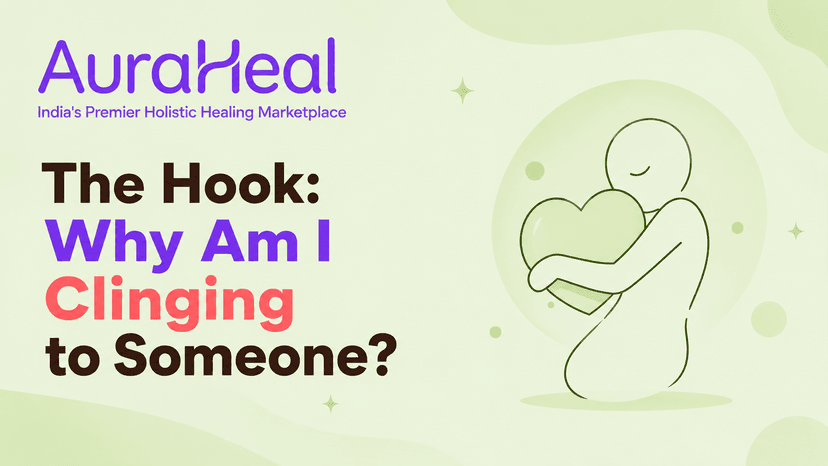
Clinging to someone starts from the desire to get love, safety, assurance, and emotional support. Intense love may turn into emotional dependence as soon as you start counting on another person in order to feel calm and secure. You constantly check your phone, fear delays in answering messages, analyze the smallest details of their behavior, and feel distressed if they need some personal space.
All these signs do not mean that you are weak or unworthy of love. They simply point to deeper fears and a lack of some basic emotional skills that require your attention. Learn more to understand why you cling to someone, what drives emotional dependence, and how you can build healthier relationship patterns.
What Does it Mean to Be Clingy in Relationships?
To cling to someone in your relationship means to hold onto this person since you feel scared, anxious, or uncomfortable when it comes to separation, distance, or uncertainty. It usually includes a lot of reassurance seeking, desire to be in contact all the time, discomfort when your partner stays somewhere else, or a requirement of constant emotional closeness.
Clingy behaviors are typically associated with anxiety and neediness. However, it can be driven by many other things such as insecurity, fear of abandonment, low self-esteem, or need for emotional support. Actually, people who behave in this way are not trying to control their partners but to manage their fears and worries.
It is important to differentiate between these factors in order to understand how to change this behavior.
Why Do I Keep Clinging to Someone?
The reasons why people become emotionally attached to someone may vary. In some cases, certain relationships trigger your old fears. In others, uncertainty and discomfort within them make you look for emotional closeness. Below are the five most common reasons why you constantly cling to someone.
Fear of Abandonment
Fear of abandonment is the main driver of clingy behavior in relationships. If you constantly worry about losing someone, everyday things can become scary for you. A delay in answering messages may look like your partner's rejection. Canceled plans can make you think that your partner is losing interest in you.
You may start seeking reassurance or trying to maintain constant emotional closeness. Temporary relief from such anxiety can give you some comfort, but this fear usually appears again after a while.
Anxious Attachment and Relationship Anxiety
People who tend to have anxious attachment styles become highly sensitive to any changes in communication, closeness, and emotional availability of their partners. Even the slightest change in tone or delay in answer can be perceived as emotional withdrawal on their part. You will start asking for reassurance, but your partner will feel pressurized and avoid contact.
Your partner's withdrawal makes you even more anxious, which creates a pattern of pursuing and withdrawing. Knowing the difference between anxious attachment and a secure one will help you understand these patterns and establish healthier boundaries, emotional awareness, and self-trust.
Low Self-Esteem and Fear of Not Being Enough
Low self-esteem can make a romantic relationship feel like a test of your worthiness. If you have an opinion that you are not lovable or valuable enough, your partner's attention may be the only thing that can give you confidence.
You may compare yourself with other people, analyze your partner's reactions, or try to change yourself in order to stay interesting. Self-worth building can teach you that your value does not depend on someone else's attention and approval.
Read More: Oral Fixation: Why Do I Crave Constant Love and Attention?
Emotional Dependence and Reassurance Seeking
If you have developed emotional dependence on your partner, they may be the only source of your happiness, comfort, and emotional security. You feel calm when you get some affection, but your inner state becomes very unstable when your partner does not pay any attention to you.
It leads to the constant need for communication and reassurance. Building personal hobbies, developing friendships, and self-soothing techniques can reduce your dependence. Emotional independence does not mean that you need nobody.
Fear of Losing Control and Uncertainty
Sometimes, clinging can become a way to control uncertainty. Checking up on social media, the partner's actions, questioning the plans, and feeling uncomfortable due to the lack of knowledge are usually rooted in the fear of the unknown.
However, no matter how many times you check up on them, you cannot guarantee what another person will do. Developing tolerance to the uncertainty helps to build emotional security. Instead of asking "How can I be sure they never leave?", ask "How can I trust myself to handle everything?"
Signs You May Be Clinging to Someone
Being clingy does not mean having dramatic scenes. Quite often, such behaviors can be expressed in some specific behaviors which become exhausting over time.
You may see that you:
Feel anxious when messages are not replied to fast enough.
Need constant reassurance regarding the relationship.
Are constantly checking up on their social media actions.
Are overanalyzing the tonality and behavior.
Feel jealous regarding their friends, work colleagues, or ex-partners.
Always cancel your plans to be accessible to them.
Feel uncomfortable when they ask for some personal space.
Frequently fear losing their interest.
Change your behavior to keep them happy.
Feel emotionally empty when they are unavailable.
Cannot imagine yourself being happy without them.
Having one of these experiences does not mean that you are being clingy. What really matters is whether fear is controlling your behavior and your emotions.
How to Stop Clinging to Someone
Giving up on clinging to someone does not mean becoming emotionally cold. It means finding ways of creating security in your own life instead of constantly begging another person to create it for you. Here are some tips you can adopt to stop clinging to someone:
1. Notice the Trigger Before Acting
When anxiety appears, do not act immediately. Think about what happened first. Did any real problem occur, or was it only uncertainty that made you feel an old fear?
Finding out the trigger can give you enough distance from your emotions to make a better decision.
2. Develop Self-Soothing Skills
Self-soothing means finding ways of calming your emotions without immediately relying on another person.
Deep breaths, journaling, meditating, walking, creating, grounding, and meaningful conversations with trustworthy people may help in creating emotional distance.
The idea is not to suppress your emotions, but to remember that your discomfort can be managed.
3. Rebuild Your Personal Life
A good relationship is supposed to be enriching your life and not your whole life.
Go back to hobbies, friendships, personal achievements, work, studying, physical exercises, creating, and other activities which make you feel like yourself.
The fuller your life is outside the relationship, the less pressure this relationship will face.
4. Communicate Your Needs Openly
Sometimes, people start to cling to someone because they are afraid to openly state their needs.
Instead of testing your partner, giving hints, becoming distant, or making your partner jealous to attract attention, communicate directly.
You can say, "I feel anxious when communication suddenly changes, and I would appreciate some clarification".
Open communication gives more security than all the indirect attempts of getting reassurance.
5. Set Healthy Boundaries
Healthy boundaries do not mean the walls that separate people. Rather, they make relationships respectful and balanced.
Do not only give your partner space but protect your own space too. Respect privacy, have different friendship groups, and let everyone have personal interests outside the relationship.
Healthy boundaries can even strengthen emotional intimacy as this intimacy becomes your choice and not your obligation.
6. Understand the Story of Your Fear
When you say "They are going to leave me", try to understand what lies behind your fear.
This fear may be related to rejection, loneliness, low self-worth, past relationships, or some experiences of emotional inconsistency in the past.
Understanding the story of your fear can help you respond to the reality instead of reacting to the past again and again.
7. Ask for Professional Help
If relationship anxiety becomes too big or frequently ruins your relationships, talking to a professional mental health specialist may be beneficial.
Therapy will give you the structured environment to understand the patterns of attachment, to learn how to regulate your emotions, improve your self-esteem, and learn healthier communication and boundaries.
You do not have to wait until your relationship is ruined to seek professional help.
Conclusion
The behavior of clinging to someone usually reflects a need for safety, reassurance, and emotional certainty. Understanding the fear behind this behavior will help you to develop healthier patterns of attachment along with boundaries and independence.
With self-awareness, open communication, and appropriate assistance, you can learn to manage relationship anxiety without relying completely on another person. Book your session at AuraHeal today and take a step toward emotional balance and healthy relationships.
Keep Exploring
Larimar: Meaning, Properties, Uses and Crystal Care!
Larimar is a rare blue crystal associated with calmness, clear communication, emotional balance, and inner peace.
Green Aventurine: Meaning, Properties, Uses and Crystal Care
Green Aventurine is a green crystal associated with luck, prosperity, emotional balance, personal growth, and positive energy.
Kambaba Jasper: Meaning, Properties, Uses and Crystal Care!
Kambaba Jasper is a dark green stone with distinctive black circular patterns, traditionally associated with grounding, calmness, and emotional balance.
Ready to Realign Your Energy?
Discover the root cause of your energetic blocks with Babita Ji — experience a profound shift completely complimentary.
Book Free Session Now