
Can Interlaced Fingers Help You Notice Your Energy Field?
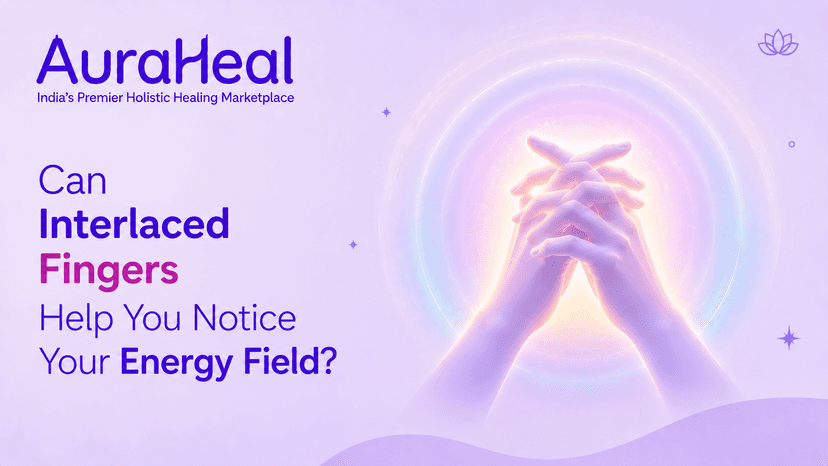
The interlaced fingers exercise is a simple technique that focuses on hands, breathing, and other bodily sensations. It is used in mindfulness, meditation, yoga, and traditional energy work and implies gently interlacing the fingers and bringing the palms close to each other to feel such sensations as warmth, tingling, pressure, or pulsing.
These sensations may be associated with Qi, prana, or subtle energy in traditional practices; they can also result from circulation, nervous activity, temperature, or concentration. Learn how to perform this exercise, understand the sensations you may notice, and explore its connection with energy awareness.
What is the Interlaced Fingers Exercise?
The interlaced fingers exercise is a palm awareness practice in which the fingers are gently interlocked, then released, and followed by bringing the palms close to each other. It is used in mindfulness, meditation, yoga, and energy work.
The practice helps you to relax, stay in the present moment, and notice changes in warmth, tingling, pressure, or movement in and around the hands. You do not need to create any specific sensations in this practice. On the contrary, you should stay relaxed and just observe what happens.
Step-by-step: How to Perform the Interlaced Fingers Exercise
The exercise takes about three to five minutes. Try to make every movement gentle, natural, and comfortable while practicing. Read the following steps to learn how to do the interlaced fingers exercise and use it as a palm awareness and energy observation practice.
Step 1: Find a Comfortable Position
You can sit on a chair, cushion, or yoga mat, or stand in a comfortable position with your feet on the floor. Make your spine naturally upright but not stiff.
Let your shoulders be relaxed, loosen your elbows, and keep your wrists relaxed too. Take two or three slow and comfortable breaths before starting.
Step 2: Relax and Warm Up Your Hands
Gently shake your hands for a few seconds. Slowly rotate your wrists and open and close your fingers. You can also gently tap your fingertips or rub your palms for a few seconds.
Now pay attention to your hands. Are they warm or cool? Are your fingers relaxed? Is there any tension in your wrists? Just observe these sensations without making any attempts to change them.
Step 3: Interlace Your Fingers
Put your hands together and thread the fingers of one hand through the spaces between the fingers of the other. Try to have a gentle grip. Do not squeeze the fingers and do not force your wrists into an uncomfortable position.
Keep the interlaced position for several breaths. Notice the contact of the fingers, pressure in your palms, and warmth or stretching sensation.
Step 4: Uninterlace Your Fingers
Unlock your fingers and let them separate. Take a few moments to notice how your hands feel now.
They may feel warmer, lighter, relaxed, or even more sensitive. You may also notice nothing. There is no specific response.
Step 5: Put Your Palms Together
Face your palms to each other and leave a small gap between them. Relax your elbows and lower your shoulders.
Focus on the space between your palms. You can use a soft gaze or close your eyes if you want to concentrate better.
Step 6: Observe the Sensations
Stay in silence for several breaths and notice what you feel. You may feel warmth, tingling, pressure, coolness, pulsing, or some kind of resistance. Some people feel nothing.
Try not to create a specific sensation in this exercise. Its main point is observation.
Step 7: Slowly Change the Distance
Move your palms closer to each other and stop. Then slowly move them away from each other.
Notice whether the sensation changes. You may feel differences in warmth, pressure, or tingling, or you may not notice anything. Just observe without trying to decide right away what this sensation means.
Read More: Peripheral Vision Exercises: Can They Help You See Auras?
Step 8: Finish With Slow Breathing
Put your hands on your thighs or in your lap. Take two or three comfortable breaths and notice your overall state.
Ask yourself how your hands and body feel now compared to the beginning of the exercise.
Benefits of the Interlaced Fingers Exercise
The interlaced fingers exercise, performed slowly and regularly, can help you become more aware of your body, relax, concentrate, and be mindful. The following list includes some of the advantages of the interlaced fingers exercise:
Helps become more body aware: You can use the exercise to pay attention to the temperature, tension, motion, pressure, and other sensations that occur in the palms.
Helps meditate: Paying attention to the palms and fingers is a great physical focus for the mind, which makes it easy for even beginners to practice the technique.
Relaxes the hands and wrists: The slow finger movements and subsequent observation can help you become more aware of any existing tension caused by typing, writing, and using a phone.
Can be used before yoga and meditation: This exercise can be a warm-up before yoga, meditation, breathing exercises, and other relaxing activities.
Helps observe: The slow movements of the palms and attention to sensation change will promote present moment awareness and will introduce you to palm energy awareness techniques for beginners.
Common Mistakes to Avoid
Although the exercise is simple, performing it with excessive force or with too high expectations can make it uncomfortable and decrease its effectiveness as an observation technique. Here are some of the mistakes to avoid while doing the interlaced fingers exercise:
Trying to feel something forcefully: Do not try to have a special sensation or make yourself feel something. Just observe what happens.
Pressing the fingers too hard: Try to keep the interlaced fingers relaxed and do not press them, as it might cause tension in the fingers and wrists.
Holding your breath: Try to breathe naturally during the exercise rather than holding it while focusing on the palms.
Tensing the upper body: Relax the shoulders, elbows, wrists, and hands so the tension does not interfere with the exercise.
Diagnosing the sensation: Do not take the tingling, numbness, pain, and other unusual sensations as a problem in your energy flow or a health issue. If you experience any of those, consult a relevant health practitioner.
Conclusion
The interlaced fingers exercise is a simple technique to observe your body and sensations like warmth, tingling, and pressure. Combined with the relaxation and attention to detail, it can become an enjoyable part of your mindfulness, yoga, or energy awareness practice.
Ready to explore the depths of your energy? Book a session today with AuraHeal’s expert healers and begin your personal energy-awareness journey.
Keep Exploring

Larimar: Meaning, Properties, Uses and Crystal Care!
Larimar is a rare blue crystal associated with calmness, clear communication, emotional balance, and inner peace.

Green Aventurine: Meaning, Properties, Uses and Crystal Care
Green Aventurine is a green crystal associated with luck, prosperity, emotional balance, personal growth, and positive energy.

Kambaba Jasper: Meaning, Properties, Uses and Crystal Care!
Kambaba Jasper is a dark green stone with distinctive black circular patterns, traditionally associated with grounding, calmness, and emotional balance.
Ready to Realign Your Energy?
Discover the root cause of your energetic blocks with Babita Ji — experience a profound shift completely complimentary.
Book Free Session Now