
Tentacles: Why Do I Give Too Much to Others?
Helping, supporting, and caring can be fulfilling experiences. But consistently overgiving can quietly distance you from yourself. You can become the person everyone relies on and ignore your own needs emotionally. People often develop overgiving habits as a result of people-pleasing, the fear of rejection, low self-worth, or responsibility for the happiness of other people.
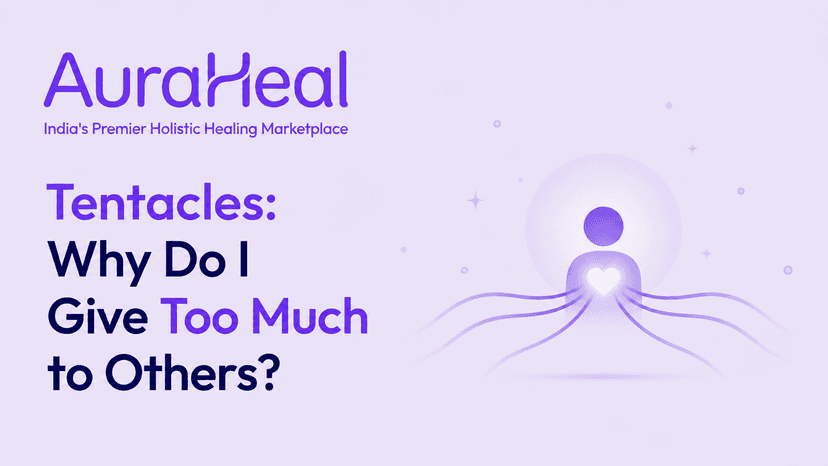
These emotional habits resemble tentacles spreading in various directions and eventually becoming attached to your time, energy, emotions, and decisions. Learn more to understand why you overextend yourself, how emotional overgiving develops, and how to create healthier boundaries without losing your compassion.
What Does "Tentacles" Mean in Emotional Giving?
The term "tentacles" can be used as a metaphor for the invisible way you become entangled in other people's lives. One tentacle might look like constantly checking whether someone is fine. Another tentacle might be agreeing when you really need to say no.
Initially, these behaviors might seem innocent enough. You may help a friend, take on additional responsibilities, listen to the concerns of others, or always be ready for anyone whenever they need you. Over time, these decisions become a habit that consumes all your emotional resources.
It is not the problem of kindness as such. Proper giving includes choices, balance, and awareness. Overgiving starts when taking care of other people repeatedly involves ignoring your own needs. You may begin to measure your worthiness according to usefulness to others. Eventually, your attention becomes split between all others except yourself.
Why Do You Give Too Much to Others?
Emotional overgiving does not happen out of nowhere. It usually stems from the emotional habits that are reinforced throughout many years. Here are the most common reasons why you might tend to overgive to others:
People-Pleasing Makes "Yes" Safer
People-pleasing implies putting your own comfort under other people's needs. You may agree to something because saying no seems selfish or uncomfortable. You might fear disappointing someone, causing conflicts, or appearing indifferent.
Instead of voicing your real feelings, you align yourself with the expectations of others. Every unnecessary yes creates another tentacle, which eventually leads to losing contact with your own needs.
Fear of Rejection Drives Excessive Giving
Sometimes, giving becomes a strategy for ensuring emotional safety. You might subconsciously believe that being helpful makes you more loved, needed, or difficult to leave.
As a consequence, you might develop an unpleasant belief: "If I stop giving, they will stop caring." When this belief becomes deep enough, setting boundaries becomes challenging. You may tolerate one-sided relationships as losing the relationship becomes scarier than losing yourself in this relationship.
You Might Feel Responsible for Everyone's Happiness
Caring for others is a natural thing. Being responsible for their emotions is different. You cannot influence whether another person is disappointed, upset, sad, or angry. But emotional overgiving can make you believe that every single negative emotion in the environment should immediately receive your attention.
You become the mediator during any conflict, the supporter during crisis situations, and the one who absorbs all the stress of others. In that way, you develop emotional burnout as there is no one who can manage the emotions of everyone else.
Also Read: The Hook: Why Am I Clinging to Someone?
Low Self-Worth May Transform Helpfulness into Validation
Low self-worth and overreliance on external approval can turn helping others into identity issues. When your worthiness depends on how appreciated you are, you feel valuable when people need you, and temporary appreciation creates security.
As a result, you may enter a difficult cycle where you overgive to feel worthy, receive validation, and then continue doing this out of pressure. Slowly but surely, your kind acts become less and less voluntary.
When Helping Others Becomes Emotional Overextension
There is a clear difference between proper generosity and emotional overextension. Proper generosity leaves space for your own life. You can help someone while resting, achieving your own goals, protecting your time, and having boundaries.
But overgiving is not like that. You feel resentment, fatigue, anxiety, frustration, and guilt for being unable to help someone. Some common signs include:
Saying yes regardless of an overwhelming feeling.
Often canceling your plans for others.
Feeling guilty when resting.
Solving problems that others are able to solve by themselves.
Feeling responsible for the reactions of others.
Getting resentful when your efforts are left unappreciated.
Trouble asking others for help.
Ignoring your own emotional needs.
These signs do not imply that your giving is inappropriate. On the contrary, they might show that your habits require certain changes.
How to Pull Your Emotional Tentacles Back
Putting up barriers does not involve being cold and selfish. It involves being aware of the point where your responsibility ends and where another person's responsibility starts. The following are some ways to pull your emotional tentacles back:
Start Observing Your Inner Signals
Your body and emotions will recognize overextension before your mind accepts it. Pay attention when you feel tired after taking care of someone, bitter after promising something, or irritated by another request.
All of the above-mentioned responses will show you your limits. Apart from asking yourself “can I do it?”, start asking yourself "do I really have enough emotional power to do this?" The answer to the question will change your decision-making for the better.
Practice Saying No Without Overexplaining
A healthy no should not necessarily be explained. Just say "I cannot do this right now" or "I am unavailable for this". Your time and energy are valuable too.
Saying no will initially cause some feelings of guilt. But keep in mind that the feelings of guilt do not necessarily mean that you did not make a mistake. Sometimes guilt appears because you try a healthier approach to communication.
Audit Your Commitments
Assess your time and energy and understand where they go. Try to define the things you are committed to out of true care and love and things that come from your guilt, fear, duty, or someone's responsibility.
Try to decrease or delegate, postpone, or remove unnecessary commitments. Pulling back does not mean leaving people. It means refusing to leave yourself.
Stop Fixing Every Problem
Helping sometimes means listening to the other person. Also, allowing other people to do their things might be helpful for their development.
Before you intervene, assess whether there is a real necessity for it. If there is not, intervention is usually the wrong way of support.
Give Yourself Permission to Be First for Yourself
The ability to set aside some time for yourself is an important part of creating boundaries. Allocate some time to rest, pursue your goals, entertain yourself, or process your emotions without any feelings of guilt.
Your needs should be attended to even if no one asks for your assistance. When you start putting yourself first, together with others, giving will become your conscious decision.
Conclusion
When you keep on sacrificing your interests to help people you love, the act of giving becomes unhealthy. Start from one boundary, one no, one decision that is in your best interest. With practice, your relationships can become more balanced, mutually respectful, and emotionally healthy.
Book a session today on AuraHeal and take a mindful step toward healthier boundaries, emotional balance, and deeper self-connection.
Keep Exploring

Larimar: Meaning, Properties, Uses and Crystal Care!
Larimar is a rare blue crystal associated with calmness, clear communication, emotional balance, and inner peace.

Green Aventurine: Meaning, Properties, Uses and Crystal Care
Green Aventurine is a green crystal associated with luck, prosperity, emotional balance, personal growth, and positive energy.
Kambaba Jasper: Meaning, Properties, Uses and Crystal Care!
Kambaba Jasper is a dark green stone with distinctive black circular patterns, traditionally associated with grounding, calmness, and emotional balance.
Ready to Realign Your Energy?
Discover the root cause of your energetic blocks with Babita Ji — experience a profound shift completely complimentary.
Book Free Session Now